Single-material PCBs sometimes fail to meet the stringent requirements of high-end applications. Hybrid PCBs, therefore, integrate multiple different substrate materials into the same circuit board structure, combining the unique properties of each material to achieve optimal performance for specific applications. They are widely used in aerospace, telecommunications, automotive electronics, and high-end computing devices.
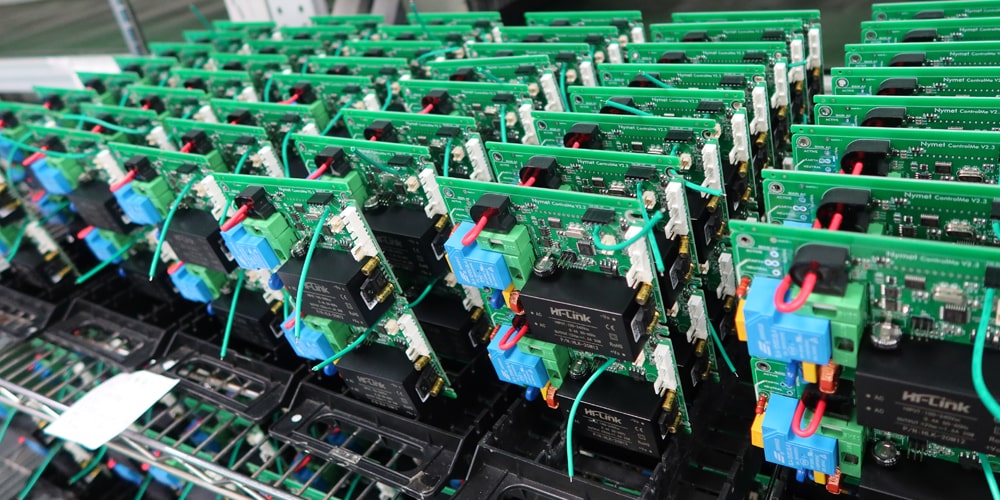
What is a Hybrid PCB?
A hybrid PCB uses different substrate materials in different areas of the same circuit board. Unlike PCBs that use a single material throughout (e.g., FR-4), hybrid PCBs cleverly combine multiple materials such as FR-4, Rogers, Teflon, ceramics, and metal core substrates to achieve a specific purpose. For example, the RF section of a communication board can use low-loss dielectric materials (e.g., Rogers) to ensure signal integrity, while the power management section uses standard FR-4 to reduce costs.
Structure and Composition
The most common hybrid PCB configuration combines standard FR-4 with high-frequency materials such as Rogers and PTFE (Teflon). FR-4 provides basic strength and cost-effectiveness for digital and low-frequency circuits, while Rogers provides high-frequency performance for RF and microwave applications. Another common combination is the use of FR-4 with a metal core substrate. The metal core portion houses high-power components requiring efficient heat dissipation, while the FR-4 portion houses standard electronic components.
Common Combinations and Applications
FR-4 + PTFE (Polytetrafluoroethylene): Suitable for high-frequency circuits requiring low signal loss;
FR-4 + Rogers: Balances cost-effectiveness and high-speed performance;
Ceramic + FR-4: The ceramic portion can withstand extreme temperatures, while the FR-4 portion reduces overall cost;
Metal Core + FR-4: Enhances heat dissipation for LED modules and power converters.
Manufacturing Process
The manufacturing process for hybrid PCBs is complex. Different substrate materials need to be precisely cut to the required dimensions and properly surface-treated. Specialized adhesives compatible with all substrate types are used during assembly.
Applications
1. Base stations, routers, and signal amplifiers benefit from integrating Rogers material portions for RF circuitry with FR-4 material portions for power and control logic. This maintains signal quality while reducing size.
2. With the increasing integration of radar systems, advanced driver assistance systems, and electric powertrains in automobiles, automotive electronics are increasingly reliant on hybrid PCBs. Combining high-frequency materials for radio frequency (RF) with FR-4 materials for RF can significantly improve the overall heat dissipation performance of the system.
3. The aerospace and defense sectors utilize hybrid PCBs to minimize weight and space while meeting stringent performance requirements. Satellite communication systems, radar equipment, and electronic warfare systems also require hybrid designs to achieve frequency and stability.
4. Medical devices, diagnostic imaging equipment, and wireless medical monitors can achieve miniaturization without sacrificing performance using hybrid PCB technology, resulting in more compact and reliable medical devices.
Conclusion
Hybrid PCBs, by combining multiple material systems, achieve better functionality and lower costs on a single circuit board. Although the manufacturing process requires sophisticated engineering design and strict process management, the advantages of hybrid PCBs have already been applied in several important fields.

 Email: all@poe-pcba.com
 Whatsapp: 85292069596
 Tel: 0755-25312250/ +8613798543496
 Factory Address: Floor 3, Jinyuan Industrial Park, No. 56, Tangtou Avenue, Shiyan Town, Baoan District, Shenzhen China





