Small Scale PCB Manufacturing
If you're holding a design that's passed prototype validation and wondering what comes next, you're in the right place. You don't need 10,000 boards. You might need 200. or 500. But you also can't keep ordering 5-at-a-time prototypes and calling it a plan.
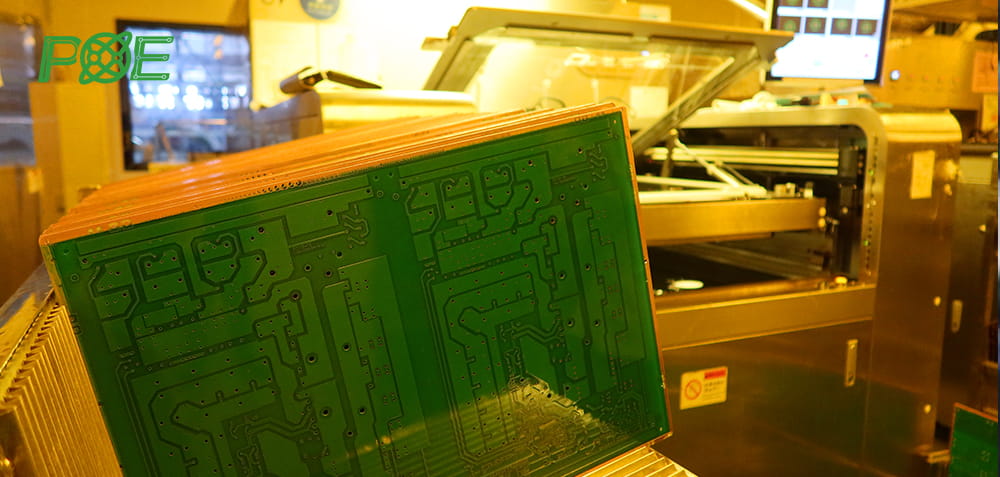
That gap—between "we proved it works" and "we're ready to flood the channel"—is exactly where small scale PCB manufacturing lives. And it's a phase most teams either rush through or skip entirely, usually at a cost they don't calculate until it's too late.
What Is Small Scale PCB Manufacturing?
Small scale PCB manufacturing—also called small batch PCB production or low volume PCB manufacturing—refers to the production of printed circuit boards in quantities that sit between prototyping and mass production. It's the phase where you stop asking "Does this design work?" and start asking "Can we build this reliably, at a reasonable cost, without locking ourselves into a massive commitment?"
The typical quantity range sits between 50 and 1,000 units, though definitions vary across manufacturers. Some define it by board area—typically 5 to 50 square meters of total panel space. Others use a straight unit count of 50 to 500 boards. The exact threshold matters less than the operational model behind it.
Here's how the industry classifies it by order area:
| Category |
Order Area |
What It Means |
| Prototype |
< 5 m² |
Design verification, typically 1–10 units |
| Small Scale / Small Batch |
5–50 m² |
The transition phase—design validation meets production reality |
| Mass Production |
> 50 m² |
Full-scale manufacturing |
The core identity of small scale PCB manufacturing is the "High Mix, Low Volume, Quick Turn" (多品种、小批量、短交期) model. Small order area. Diverse product types. Short lead times. That's the operating reality.
Here's the bottom line: small scale PCB manufacturing is not "just a few more prototypes," and it's not "a smaller batch of mass production." It's a distinct manufacturing phase with its own economics, processes, and strategic purpose. If you treat it like either extreme, you'll either overpay or end up with boards that aren't ready for the real world.
Small Scale vs. Prototype vs. Mass Production
| Dimension |
Prototype |
Small Scale |
Mass Production |
| Typical Quantity |
1–10 units |
50–1,000 units |
1,000+ units |
| Order Area |
< 5 m² |
5–50 m² |
> 50 m² |
| Primary Goal |
Design verification—"Does it work?" |
Transition validation—"Can we build it?" |
Scale delivery—"Can we build it cheaply?" |
| Cost Structure |
Highest per-unit cost |
Significantly lower per-unit than prototype |
Lowest per-unit cost |
| Lead Time |
Extremely short (2–5 days) |
Moderate (5–10 days) |
Longer (several weeks) |
| Design Flexibility |
Maximum—change anything |
Moderate—some flexibility remains |
Minimal—changes are expensive |
| Production Method |
Fully flexible, manual-heavy |
Semi-automated, gradually standardizing |
Fully automated, standardized |
| Typical Customer |
R&D engineers |
OEM engineering teams, academic labs, startups |
Large OEMs, contract manufacturers |
The takeaway: small batch manufacturing is not "more prototypes" and it's not "less mass production." It's the bridge. You use it when your design is validated enough to leave the lab, but not validated enough to bet the company on a 10,000-unit run.
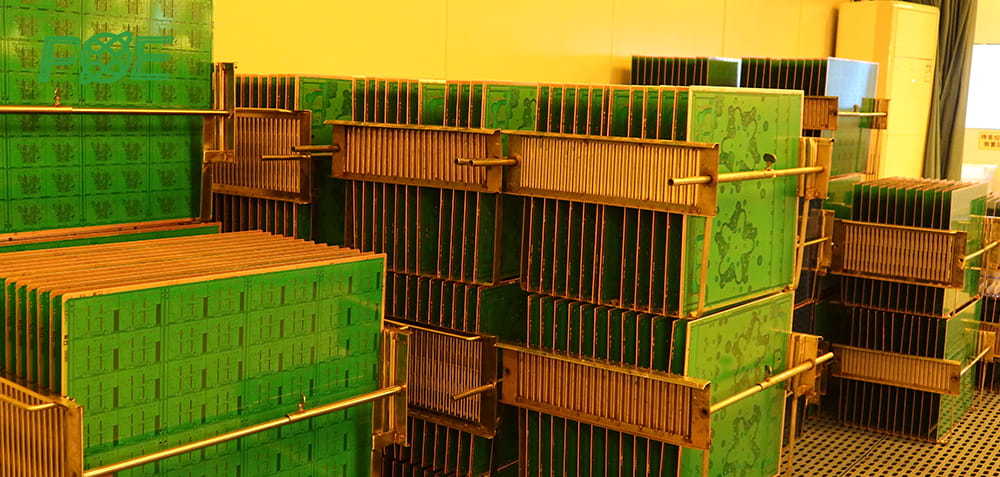
If you're still changing your schematic every other day, stay in prototype. If you've locked the design and need to test the market, small batch is where you belong. If you already have purchase orders from customers and predictable demand, talk to a mass production house.
Why Small Scale PCB Manufacturing Matters
1. Cost-Effective Transition from Prototyping
Prototyping is expensive on a per-unit basis because setup costs—tooling, programming, engineering review—are spread across a handful of boards. Small scale production spreads those same fixed costs over 50, 200, or 500 units instead.
To give you a sense of the magnitude: prototype pricing might run Xperunit∗∗,whileasmallbatchofafewhundredboardstypicallydropsthatto∗∗Y per unit—a meaningful reduction that adds up fast if you're funding it yourself. The exact numbers depend on layer count, board size, and process complexity, but the direction is consistent: more units, lower per-unit cost, without crossing into mass production territory.
2. Design Flexibility Without the Cost of Mass Production
In mass production, a design change means new stencils, re-qualified processes, and potentially scrapped inventory. In small batch, you can still refine your PCB based on real-world testing feedback—adjust a trace width, swap a via type, tweak the stack-up—without committing to thousands of units or absorbing heavy tooling costs.
For hardware engineers, this is the last window where your design is still yours to change.
3. Faster Time-to-Market
Mass production lines require extensive setup, scheduling lead time, and often dedicated capacity allocation. Small scale manufacturing bypasses much of that. You're not waiting for a production slot on a line that runs millions of boards a month. You're working with a partner whose entire operation is built around shorter runs and faster turns.
For procurement managers, this means you can secure initial inventory for a product launch without a three-month lead time hanging over your head.
4. Risk Mitigation Before Scaling
Small scale manufacturing lets you run thorough functional testing, environmental validation, and quality checks on a meaningful sample size—not just the 3 boards that survived the prototype round. You find the problems now, not after you've committed to 5,000 units and a container shipment.
One defective batch at mass production scale isn't just a quality issue. It's a recall, a redesign, and a credibility hit. Small batch is your insurance policy.
5. Ideal for Niche and Custom Applications
Not every product needs thousands of units. Medical devices, aerospace systems, industrial controls, military equipment, and specialized IoT products often require high-reliability PCBs in limited quantities. Small scale PCB manufacturing is built for exactly this profile—custom requirements, lower volumes, no compromise on quality.
How Small Scale PCB Manufacturing Works?
Step 1: Design and DFM Review
Engineers create schematics using tools like Altium Designer, Eagle, or KiCad. Before production begins, a Design for Manufacturability (DFM) review checks whether your design can actually be built reliably at your target volume. This step catches issues—insufficient annular rings, missing silkscreen clearance, stack-up mismatches—before they become expensive mistakes.
Step 2: Material Procurement and Preparation
Base materials, copper foil, solder mask, and surface finish chemicals are sourced. For small batches, this step has a unique challenge: suppliers often have minimum order quantities of their own, so your manufacturer needs to either stock common materials or aggregate orders across customers. If they're buying specialty materials for your job alone, expect longer lead times.
Step 3: Inner Layer Processing (for Multilayer Boards)
For multilayer PCBs, inner layer circuits are imaged, etched, and inspected. Small batch production here requires frequent adjustments to process parameters—line width compensation, etch factor calibration—because the next job on the line might be a completely different design. Equipment must support quick changeovers without sacrificing accuracy.
Step 4: Lamination
Layers are stacked and bonded under heat and pressure. Layer alignment accuracy is non-negotiable—poor lamination causes layer misalignment or bonding defects that won't show up until electrical testing, if at all. Even on a 50-board run, this step gets the same attention it would in mass production.
Step 5: Drilling
Holes for vias and component leads are drilled. For multilayer boards, drilling verticality and hole-size consistency are critical—a few degrees of drift can break electrical connection between layers. Small batch shops need drill equipment capable of holding tight tolerances across diverse hole sizes in a single panel.
Step 6: Plating
Copper is deposited through the drilled holes to create electrical connections between layers. Small batch production requires optimized racking layouts to ensure uniform plating thickness across every board in the panel. Uneven plating is one of the most common failure modes in low-volume runs—ask your supplier how they handle this.
Step 7: Outer Layer Processing and Solder Mask
Outer copper layers are patterned through imaging and etching. A solder mask is then applied and cured to protect copper traces and prevent solder bridges during assembly.
Step 8: Surface Finish
A protective finish is applied to exposed pads. Common options include ENIG (Electroless Nickel Immersion Gold), HASL (Hot Air Solder Leveling), and OSP (Organic Solderability Preservative). Your choice depends on component density, shelf life requirements, and assembly method. This isn't a decision to make casually—your CM will have opinions, and you should listen.
Step 9: Electrical Testing and Inspection
This is where small batch and mass production diverge most clearly. In high-volume manufacturing, statistical sampling is often acceptable. In small batch, 100% inspection is the standard—every board tested, not a representative sample. Testing typically includes Automated Optical Inspection (AOI), flying probe testing, and functional testing where applicable.
If a supplier tells you they only sample-test small batches, ask why. Then find another supplier.
Step 10: Final Inspection and Delivery
Boards are visually inspected against IPC acceptability standards, packaged to prevent damage in transit, and shipped. For international delivery, proper ESD protection and moisture barrier packaging are essential—especially for boards with ENIG or OSP finishes that can degrade in transit.
Quality Standards for Small Scale PCB Manufacturing
| Standard |
What It Covers |
| IPC-A-600 |
Acceptability of bare printed boards—visual criteria for unpopulated PCBs |
| IPC-A-610 Class 2/3 |
Acceptability of electronic assemblies—workmanship standards |
| IPC-6012 |
Qualification and performance of rigid PCBs |
| ISO 9001 |
Quality management systems—foundation for consistent quality |
| ISO 14001 |
Environmental management systems |
| ISO 13485 |
Medical device quality management |
For most commercial applications, IPC Class 2 is the baseline. For medical, automotive, or aerospace, you'll want Class 3 or industry-specific certifications. Don't assume your supplier holds these—ask, and ask for the certificate number.
How to Choose a Small Scale PCB Manufacturing Partner?
1. Verify Qualifications and Process Experience
Look for:
ISO 9001 certification (minimum quality baseline)
Relevant industry certifications (IATF 16949 for automotive, ISO 13485 for medical)
Proven small batch production experience—ask for case studies or samples
Red flag: A factory that primarily runs mass production and treats small orders as an afterthought. Their line is optimized for 10,000-unit runs. Your 200-board order will either get rushed through or deprioritized. Neither ends well.
2. Assess Quality Control Systems
Small batch orders require more quality attention per board, not less.
Ask:
Do they perform full-process inspection—from incoming materials to finished boards?
What is their inspection ratio for small batches? (100% is the right answer.)
Do they have a documented non-conformance handling process?
3. Evaluate Delivery Capability
Small batch orders live and die by lead time.
Ask:
What is their standard lead time for small batch orders?
Do they have dedicated small batch production lines or priority scheduling?
What is their on-time delivery record for orders under 50 m²?
4. Review Technical Capability
Ask:
What is their maximum layer count for small batches?
Can they handle special processes—blind/buried vias, impedance control, rigid-flex?
What is their minimum trace width and spacing?
If your design pushes boundaries, don't find out your supplier can't handle it after you've already sent files and waited a week.
5. Check Material Sourcing and Supply Chain
Ask:
Do they source from authorized, reputable material suppliers?
Can they handle long-lead-time or specialty materials?
Do they maintain buffer inventory for critical materials?
A supplier who sources from the lowest bidder on alibaba—without verification—is a supplier you'll hear about again when your boards fail after reflow.
Why POE for Your Small Scale PCB Manufacturing?
At POE, we understand that small scale PCB manufacturing isn't just "smaller production." It's a distinct and strategic phase that requires a fundamentally different approach than prototyping or mass production. We've built our entire operation around this reality.
Here's what POE delivers for small scale PCB manufacturing:
Flexible volumes: 50 to 1,000+ boards—we're set up specifically for this range, not as an exception to our normal business.
Full in-house capability: PCB fabrication under one roof. No outsourcing critical steps. No hand-offs between facilities that create delays or quality gaps.
"High Mix, Low Volume, Quick Turn" expertise: Diverse designs and tight deadlines aren't exceptions for us—they're the norm.
Rigorous quality systems: ISO 9001 certified, IPC-A-600 compliant, with 100% inspection on every batch. Not sampled. Every board.
Comprehensive testing: AOI, flying probe, and electrical testing on every single board, every time.
Engineering support: Free DFM review on every order. We catch issues before production starts, not after.
Authorized material sourcing: We buy from reputable, vetted suppliers. No substandard materials, no surprises.
Fast turnaround: 5–10 day lead times for most small batch orders.
Global shipping: We deliver to your door, wherever you are.
Whether you're validating a design, preparing for an initial product launch, or fulfilling a custom order for a specialized application—POE is the small scale PCB manufacturing partner you can trust.
FAQ
Q: What is small scale PCB manufacturing?
Small scale PCB manufacturing—also called small batch or low volume PCB production—is the production of printed circuit boards in quantities typically ranging from 50 to 1,000 units. It sits between prototyping and mass production, designed for the phase where your design is validated but you're not ready for full-scale manufacturing.
Q: What is the difference between small scale and prototype PCB manufacturing?
Prototype manufacturing produces 1–10 boards for design verification. Small scale manufacturing produces 50–1,000 boards for design validation, market testing, and initial production. Prototypes prioritize flexibility above all else; small batch balances flexibility with production readiness.
Q: What is the difference between small scale and mass production?
Mass production is 1,000+ units optimized for the lowest per-unit cost. Small scale production is 50–1,000 units that balance cost with flexibility—allowing for design tweaks without significant tooling costs or volume commitments.
Q: How much does small scale PCB manufacturing cost?
Costs vary based on board complexity, layer count, materials, and quantity. The key point: per-unit cost drops meaningfully compared to prototyping because fixed setup costs are spread across more boards. For an accurate quote, you'll need to send your Gerber files and specifications to a manufacturer for review.
Q: What are the main challenges of small scale PCB manufacturing?
The four core challenges are cost control (no economies of scale), process complexity (diverse designs in one production run), delivery time (tight deadlines with potential material delays), and quality consistency (frequent changeovers creating more room for error).
Q: What industries use small scale PCB manufacturing?
Industries that require custom, low-volume PCBs—medical devices, aerospace, industrial controls, automotive, military, and R&D departments across OEMs. Any application where reliability matters more than unit cost at scale.
Q: What is the definition of "small batch" in PCB manufacturing?
While definitions vary by manufacturer, small batch is typically defined as 5 to 50 square meters of total board area or 50 to 1,000 units. Some manufacturers use the narrower range of 50–500 units.
Q: What is "High Mix, Low Volume, Quick Turn"?
It's the industry operating model for small batch PCB manufacturing—handling diverse product types (high mix) in small quantities (low volume) with short delivery times (quick turn). It's the opposite of mass production's "one design, thousands of units, long setup."
Q: What files do I need for small scale PCB manufacturing?
You'll need Gerber files (RS-274X format), NC drill files, layer stack-up information, and a fabrication drawing with specifications. A complete package prevents back-and-forth and keeps your lead time on track.
Q: How long does small scale PCB manufacturing take?
Typical lead times are 5–10 days for most small batch orders, depending on complexity and material availability. Special processes or imported materials may extend this.
Q: Does small scale PCB manufacturing have the same quality standards as mass production?
Yes. Quality requirements for small batches are no less stringent than mass production. In fact, small batches typically require 100% inspection rather than statistical sampling, making quality verification more rigorous per board.
Q: What is the minimum order quantity for small scale PCB manufacturing?
It varies by manufacturer. Some have no strict minimum; others start at 50 units. POE offers flexible volumes starting from small quantities—contact us to discuss your specific needs.
Ready to Start Your Small Scale PCB Manufacturing Project?
Small scale PCB manufacturing is your opportunity to validate your design in the real world, test the market, and build initial inventory—before you commit to mass production. Don't skip this phase. The cost of skipping it is almost always higher than the cost of doing it right.
Send us your Gerber files and specifications. We'll provide a DFM review and a fixed-price quote within 24 hours—so you know exactly what to expect before you commit.

 Email: all@poe-pcba.com
 Whatsapp: 85292069596
 Tel: 0755-25312250/ +8613798543496
 Factory Address: Floor 3, Jinyuan Industrial Park, No. 56, Tangtou Avenue, Shiyan Town, Baoan District, Shenzhen China





