The term "one-stop-shop" is often overused. In precision manufacturing, Turnkey means single-source accountability. We procure every component, fabricate the bare boards, manage the SMT assembly, conduct rigorous testing, and ship finished, verified product to your door.The "key" you are turning isn't just starting a process; it's locking in reliability. Instead of managing four different vendors—each with their own lead times and quality standards—you have one contractual relationship. This consolidation is critical for companies moving beyond the prototype phase into sustained, repeatable production runs where consistency is paramount.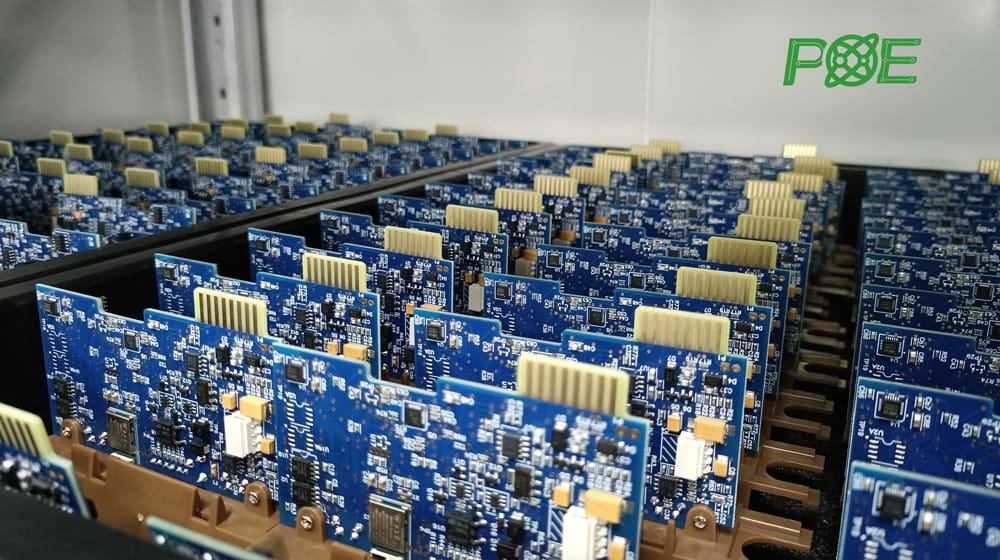
Full Turnkey vs. Partial Turnkey vs. Consignment
| Feature |
Full Turnkey |
Partial Turnkey |
Consignment |
| Procurement |
Managed entirely by Manufacturer |
Split: Customer provides critical components |
Managed entirely by Customer |
| Logistics |
Unified workflow |
Requires interface management |
Complex; customer owns all shipping risks |
| Best Suited For |
Ongoing production, cost-sensitive programs |
Products with legacy or propriety ICs |
Companies with deep, pre-existing supply chains |
Full Turnkey is often the most efficient model for mature businesses looking to optimize operational overhead. Partial Turnkey can seem appealing, but it introduces a "hand-off" risk where quality issues become a matter of debate between the parts you supplied and the parts we sourced. Consignment offers maximum control but demands maximum internal resources—you own the inventory costs, the obsolescence risks, and the logistics delays.
The Operational Benefits: Beyond "Saving Time"
Time savings are a given. The real value of Turnkey lies in risk mitigation and cost stabilization for established product lines.
1. Single Point of Accountability
In a fragmented supply chain, a failure is always someone else's fault. The fabricator blames the components; the assembler blames the board quality. With Turnkey, there is no ambiguity. If a board fails functional testing, we investigate and resolve it. You have one project manager and one warranty. This clarity is essential for internal compliance and external audits.
2. Engineering Bandwidth Protection
Senior engineers and technical leads are expensive resources. When they spend 15 hours a week tracking component shipments or arguing with vendors, they aren't refining designs or improving yields. Turnkey protects your R&D investment by ensuring your experts stay focused on innovation, not logistics.
3. Component Integrity and Traceability
This is where many production lines fail. We source exclusively from authorized distributors (Arrow, Avnet, Mouser, DigiKey) and verified supply chains. There is no gray market, no "equivalent" parts without approval, and no counterfeit risk. For regulated industries, we maintain the traceability documentation required for ISO and industry-specific certifications.
4. Cost Stabilization through Aggregation
While managing sourcing in-house might seem cheaper, it rarely scales. Small-volume purchases rarely hit price breaks. As a turnkey partner, we aggregate demand across our client base. This allows us to secure volume pricing on raw materials and components that would be inaccessible to an individual company, helping you protect your margins as you scale.
5. Integrated DFM/DFT Analysis
Design for Manufacturability (DFM) isn't a courtesy; it's a cost-control mechanism. Every order at POE undergoes a rigorous DFM/DFT review before fabrication begins. Identifying a solder mask issue or a BGA pad misalignment during the design phase prevents expensive re-spins and scrap later. We don't just build what you send us; we verify that it can be built reliably.
Is Turnkey the Right Fit for Your Production Strategy?
Production Stability is a Priority: You have recurring production runs and need predictable lead times.
Margin Protection Matters: You want to leverage supplier aggregation to stabilize BOM costs.
Audit and Compliance are Required: You operate in sectors (Medical, Industrial, Automotive) where traceability is mandatory.
Resource Optimization is Key: You prefer to invest in R&D rather than expanding your procurement department.
Conversely, if you have deeply entrenched, long-term contracts with specific silicon manufacturers or possess a large, existing inventory of proprietary components, a Consignment or Partial Turnkey model might be worth evaluating.
The Cost Equation: Understanding the Premium
Let's address the financial aspect directly. A Turnkey service typically adds a 5–15% premium compared to the raw cost of managing everything independently.
However, that comparison is incomplete. It ignores the Total Cost of Ownership (TCO).
Hidden Labor Costs: A senior engineer or PM spending 10 hours a week on procurement is costing you $800–$1,200 weekly in salary alone.
Risk of Scrap: A single undetected design flaw slipping into a 1,000-unit run due to lack of DFM can cost tens of thousands in scrap.
Opportunity Cost: Delaying a product launch by two weeks due to supply chain bottlenecks can erode market share permanently.
Turnkey isn't an expense; it's an investment in process control. For most SMEs and established hardware firms, the premium paid is significantly lower than the hidden costs of managing a fragmented supply chain.
Selecting a Turnkey Partner
Supply Chain Transparency: Ask for their sourcing policy. Do they provide traceability reports? How do they handle "Last-Time-Buy" notices or EOL components?
Quality Infrastructure: Beyond ISO certifications, ask about their specific inspection equipment. Do they utilize 3D AOI and X-ray for BGAs? What is their documented DPMO (Defects Per Million Opportunities)?
Project Management: Who is your point of contact? Ensure you have a dedicated project manager who understands both engineering and supply chain dynamics, not just a salesperson.
Financial Stability: A factory is only as good as its ability to survive market fluctuations. A stable partner ensures your supply chain remains intact for years.
Why POE for Your Turnkey PCB Assembly
POE is a Shenzhen-based manufacturing partner built for reliability. We are not a broker; we own the process from start to finish. Our value proposition is centered on three pillars:
1. Uncompromising Quality Control
We adhere to ISO 9001 and ISO 13485 standards. Every board undergoes 100% AOI and functional testing. We utilize X-ray inspection for BGA and fine-pitch components to ensure structural integrity. We don't ship "good enough"; we ship to spec.
2. Secure Component Sourcing
Our sourcing network is restricted to authorized distributors. We provide full traceability for every component we place. In a volatile global supply chain, this commitment to authenticity protects your brand reputation and ensures regulatory compliance.
3. Scalable Production Capacity
From complex pilot runs to stable, high-mix production batches, our facility is engineered for scalability. We understand that your needs change; our processes are flexible enough to accommodate evolving BOMs while maintaining consistency across volumes.
We serve clients across industrial automation, medical devices, and commercial electronics—businesses that depend on us for consistency, not just capacity.
FAQ
1. What documentation is required for a Turnkey Quote?
We require Gerber files (RS-274X), a comprehensive Bill of Materials (BOM) with Manufacturer Part Numbers (MPNs), and a Centroid/Pick-and-Place file. Any specific testing protocols should also be included.
2. How do you manage component obsolescence or shortages?
We monitor BOMs proactively. If a component is nearing EOL or facing allocation, we notify you immediately with a Cross-Reference Report suggesting qualified alternatives. We never substitute parts without explicit written authorization.
3. What are your standard lead times for Turnkey projects?
Standard lead times range from 5–10 business days, contingent on component availability. We specialize in managing complex BOMs to minimize delays.
4. Do you support both prototypes and full production?
Yes. We support flexible order volumes. While we accommodate functional prototypes, our primary infrastructure is optimized for sustained production runs and long-term supply agreements.
5. How do you ensure component authenticity?
All components are procured through franchised distribution channels. We maintain Certificates of Conformance (CoC) and can provide detailed traceability reports upon request to satisfy internal audits or regulatory requirements.
6. Can we audit your facility?
Absolutely. We welcome current and prospective clients to tour our Shenzhen facility. For international clients, we offer live video walkthroughs of our production lines and quality control labs.
Streamline Your Production Pipeline
Your competitive advantage lies in your design and your ability to deliver to market consistently. It shouldn't be eroded by supply chain volatility.
Send us your design files. Within 24 hours, we will provide a comprehensive DFM analysis and a fixed-price Turnkey quote. Eliminate the variables, reduce your operational overhead, and gain a manufacturing partner who is accountable for the result.
Contact POE to discuss your next production run.

 Email: all@poe-pcba.com
 Whatsapp: 85292069596
 Tel: 0755-25312250/ +8613798543496
 Factory Address: Floor 3, Jinyuan Industrial Park, No. 56, Tangtou Avenue, Shiyan Town, Baoan District, Shenzhen China





