Small Run PCB Assembly
If you're holding a design that works on the bench and wondering how to get from 10 pieces to 10,000 without a disaster, you're in the right place. Small run PCB assembly—typically 10 to 250 assembled boards—is that critical, often underestimated phase where good designs either prove they can survive the real world or expose costly flaws before it's too late.
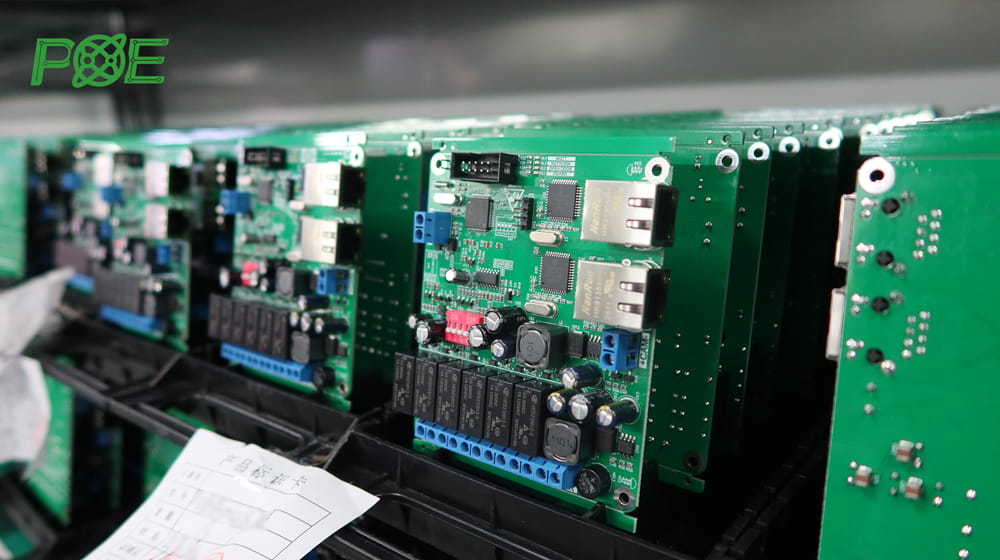
At POE, we see small runs not as a mere order size, but as a strategic milestone. It's the bridge between a functioning prototype and a profitable mass production line. And while some in the industry use "small run," "low volume," and "prototype" interchangeably, the distinctions matter—especially when you're the one signing the purchase order.
What Exactly is Small Run PCB Assembly?
Small run PCB assembly fills the gap between proof-of-concept and full-scale manufacturing. Quantitatively, we define it as 10 to 250 units.
Why this specific range? Because it's where hand-soldering becomes impractical, yet traditional high-volume EMS providers lose interest. It's the phase where you stop asking, "Does this circuit work?" and start asking, "Can we build 50,000 of these reliably and profitably?"
We do accommodate orders as low as 5 pieces, particularly when there's a clear path to scaling. However, the 10–250 window is where the economics and logistics of small run truly come into focus. This isn't just a few extra prototypes; it's your first real manufacturing run.
Small Run vs. Prototype vs. Low Volume vs. Mass Production
| Dimension |
Prototype |
Small Run |
Low Volume |
Mass Production |
| Typical Quantity |
1–10 |
10–250 |
250–2,000 |
10,000+ |
| Primary Purpose |
Function verification |
Design & Market Validation |
Process ramp-up |
Cost optimization |
| Cost Priority |
Speed |
Validation value |
Balance |
Unit cost |
| Design Changes |
Expected |
Possible, manageable |
Costly |
Prohibitive |
| Testing |
Basic check |
100% Inspection |
100% Inspection |
Statistical Sampling |
| Supplier Fit |
Prototype houses |
Specialized assemblers (like POE) |
EMS factories |
High-volume EMS |
A prototype tells you if the circuit works in the lab. A small run tells you if your product works in the real world. Low volume and mass production assume you've already solved the problems a small run is designed to find.
Why Small Run PCB Assembly Matters?
We've seen too many teams skip this phase to save a few thousand dollars, only to lose hundreds of thousands later. Here's why small run is non-negotiable for serious hardware development:
1. Design Validation Beyond the Lab
Your lead engineer can hand-solder a prototype, tweaking resistor values and bending leads to make it work. A small run uses your actual stencil, paste, and pick-and-place process. This exposes issues invisible in the lab: solderability problems, thermal stress failures, and pad geometries that look good on screen but fail during reflow.
2. Market and Customer Validation
Investors and early adopters don't want to see a breadboard; they want a product. Small runs produce professional-grade units for beta testing, trade show demos, and investor samples. The feedback from 50 units in the field is worth more than 500 hours of lab simulation.
3. Supply Chain and BOM Validation
This is where the "Bill of Materials" meets reality. We recently worked with a client whose BOM specified a critical microcontroller. During small run sourcing, we discovered the chip had a 26-week lead time and a 3,000-piece MOQ. A mass production order would have left them with a factory full of bare boards and a 6-month delay. In a small run, we identified the issue, sourced an alternative, and kept the project on track.
4. Manufacturing Process Validation
A small run is your audition for mass production. How does your assembler handle your specific panel layout? What's their true defect rate on your design? You want to answer these questions at 50 units, not 5,000.
Typical Applications for Small Run PCB Assembly
Beta Test Units (10–100 pcs): Real products for real users.
Investor & Trade Show Demos (5–50 pcs): High-reliability units for high-stakes presentations.
Pilot Production (50–250 pcs): Validating the entire supply chain and assembly process.
Design Verification Testing (20–100 pcs): Formal testing under environmental stresses.
Limited Edition / Niche Products (50–200 pcs): High-mix, low-volume specialty runs.
What a Professional Small Run Service Includes?
Mandatory DFM/DFT Review: We don't just load your Gerbers; we analyze them. Catching a missing solder mask aperture before stencil fabrication saves days.
Authorized Component Sourcing: No grey market parts. We leverage our network to navigate MOQs and EOL notices.
100% AOI and X-ray Inspection: Unlike mass production, which relies on statistical sampling, every single board in a small run is critical. Every board gets inspected. BGAs get X-rayed. No exceptions.
Functional Testing: We don't just build them; we ensure they work according to your test specs.
The Cost Reality of Small Run PCB Assembly
Let's be transparent: the per-board cost for a small run is higher than for mass production. There's no way around the math—setup costs (stencils, programming, engineering reviews) are amortized over fewer units.
Example (2026 Market Estimate):
A 4-layer board with 150 components might cost:
10 pcs: ~$85/board
100 pcs: ~$30/board
1,000 pcs: ~$12/board
Why the premium? You're paying for flexibility, attention, and risk mitigation. If you see a quote significantly lower than these figures, ask where they are cutting corners—because they are. It's likely in the inspection process or component sourcing. The cost of a failed mass production run due to a bad batch of counterfeit capacitors dwarfs the small premium paid for a properly executed small run.
A good partner helps manage this. At POE, we actively look for ways to consolidate orders or suggest alternative components to keep your small run affordable without compromising quality.
How to Choose a Small Run PCB Assembly Partner
Do you have a true "No MOQ" policy? Or do you discourage small orders? We welcome 10-piece runs because we know they lead to 10,000-piece runs.
How do you handle component sourcing? If they can't explain how they handle MOQ constraints or EOL parts, they aren't ready for your small run.
Is DFM review standard? If they say "we'll let you know if we see something," that's not good enough. It should be a formal step.
What is your inspection protocol? If they mention "statistical sampling" for a 50-piece order, walk away. You need 100% AOI and X-ray.
Who is my point of contact? Small runs often require nimble communication. You need direct access to engineers, not just a sales portal.
Beware of the "We'll do your prototype cheap and nail down the big contract later" pitch. This often leads to a disconnect when it's time for small run validation, as the processes used for quick-turn prototypes rarely scale cleanly into reliable production.
Why POE for Your Small Run PCB Assembly?
At POE, small run assembly isn't a sideline; it's a core competency. We understand that the 10–250 unit range is where your product's future is decided.
Zero MOQ Friction: Whether it's 10 boards or 250, you get the same rigorous process.
Supply Chain Authority: We source only from authorized distributors, protecting you from counterfeits and shortages.
Quality Without Compromise: 100% AOI, X-ray for BGAs, and comprehensive functional testing on every single unit.
Engineering-Led Process: Our DFM/DFT review is standard, catching issues before they become expensive mistakes.
Built for Scale: We treat your small run as the first step in a long-term partnership. We're not just building boards; we're qualifying your product for mass production.
We've supported NPIs across medical, automotive, and industrial sectors. We know what's at stake when you move from the lab to the loading dock.
FAQ
Q: What's the difference between small run and prototype?
A: Prototypes (1–10 pcs) verify the circuit works. Small runs (10–250 pcs) verify the design can be manufactured and meet market needs.
Q: Why is small run more expensive per board?
A: Fixed setup costs (stencils, programming) are spread over fewer units. However, the total investment is far lower than a mass production error.
Q: Do you offer consignment assembly for small runs?
A: Yes. If you have specific components (like long-lead ICs), we can integrate your consigned parts into our assembly process.
Q: How long does it take?
A: Standard lead times are 5–10 business days. We also offer expedited options for critical NPI milestones.
Ready to Validate Your Design?
Don't let the transition from prototype to production be a leap of faith. A professional small run gives you the data—and the confidence—to scale.
Send us your Gerber files and BOM today. We'll provide a comprehensive DFM review and a firm, no-obligation quote within 24 hours.
Contact POE now to start your small run.
Share This Story, Choose Your Platform!

 Email: all@poe-pcba.com
 Whatsapp: 85292069596
 Tel: 0755-25312250/ +8613798543496
 Factory Address: Floor 3, Jinyuan Industrial Park, No. 56, Tangtou Avenue, Shiyan Town, Baoan District, Shenzhen China





