Consignment
You procure and kit all or most components, then ship them to the contract manufacturer. The contract manufacturer focuses solely on assembly.
Best suited for organizations with strong sourcing teams, exclusive supplier relationships, or stringent component compliance requirements (e.g., aerospace, medical).
Decision guidance: If supply chain management isn't a core strength, full turnkey usually wins. If component sourcing is a differentiator—for example, you have negotiated pricing or traceability requirements—consignment gives you control where it matters.
Contract Manufacturer vs. EMS
| Dimension |
PCB Assembly Contract Manufacturer |
EMS (Electronics Manufacturing Services) |
| Service Scope |
Board-level assembly |
Design, prototyping, assembly, system integration, test, logistics, after-market |
| Service Depth |
PCB-centric |
End-to-end product focus |
| Engagement Model |
Flexible, modular |
Typically long-term, integrated programs |
| Typical Clients |
OEMs needing board assembly |
OEMs outsourcing complete product manufacturing |
In short: a PCB assembly contract manufacturer is your partner for building boards; an EMS provider is your partner for building products. PCB assembly is a core piece of what EMS offers—but not the whole picture.
How to Choose the Right PCB Assembly Contract Manufacturer?
This is where most buying guides go generic. Here's a framework that reflects how seasoned OEMs actually evaluate partners.
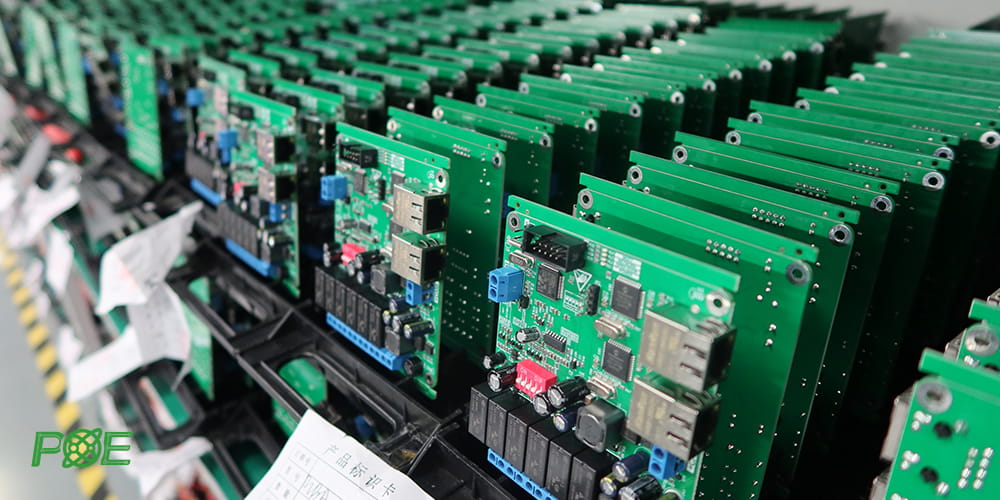
Step 1 – Technical Capability (Beyond the Brochure)
Don't ask what they cando. Ask what they routinelydo well.
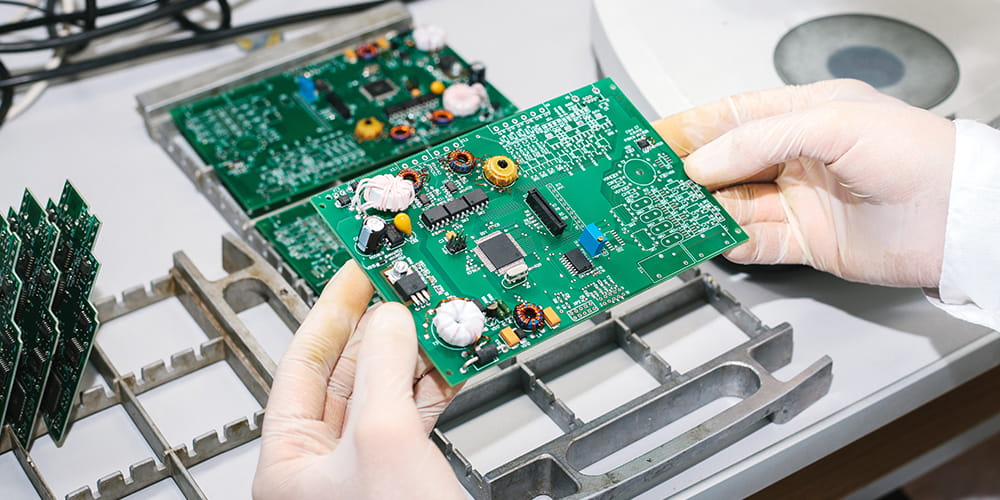
Minimum component size: Can they handle 0201, 01005 reliably?
Placement precision: What's the smallest BGA pitch they run at volume (0.3mm? 0.4mm?)?
Package mix: BGA, QFN, CSP, PoP?
Special processes: blind/buried vias, rigid-flex, RF materials?
Key question to ask: "Walk me through the most complex board you've built in the last six months. What was the yield, and what issues did you encounter?"
Step 2 – Quality System Maturity
Relevant standards: ISO 9001 is baseline. IATF 16949 for automotive, ISO 13485 for medical, AS9100D for aerospace.
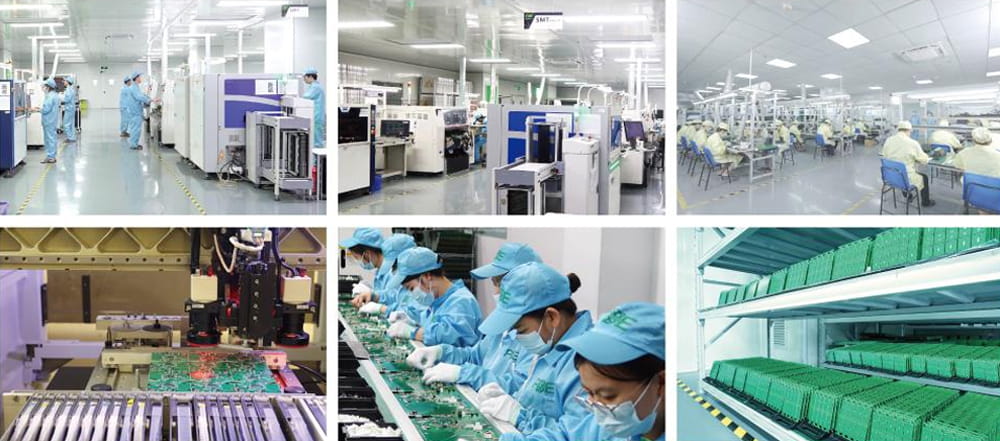
Inspection capability: AOI, X-ray, ICT, FCT—and how they're used, not just whether they exist.
IPC compliance: Are they building to IPC-A-610 Class 2 or Class 3 consistently?
Key question to ask: "What's your rolling twelve-month shipped defect rate? How do you trace and correct root causes?"
Step 3 – Supply Chain Resilience
Component sourcing is where many CM relationships break down.
Procurement channels: Authorized distributors, franchised lines, or spot market?
Long-lead mitigation: Buffer stock, alternate sourcing strategies?
Obsolescence management: EOL monitoring and last-time-buy planning?
Key question to ask: "If a critical component goes NRND or EOL, what's your typical turnaround to propose a qualified alternative?"
Step 4 – Delivery Performance Under Pressure
Standard lead time vs. expedite capability
Historical on-time delivery rate (aim for >98%)
How they communicate delays—proactively or reactively
Key question to ask: "What was your worst delivery delay in the past year, and why did it happen?"
Step 5 – Communication and Transparency
A good PCB Assembly Contract Manufacturer doesn't make you chase updates.
Dedicated program manager or NPI engineer?
Visibility into build status, test results, and quality metrics?
DFM feedback loop: How quickly do they respond to design concerns?
Key question to ask: "From PO release to shipment, what touchpoints can I expect, and who owns communication?"
What to Watch Out For
Quotes significantly below market often mean corners will be cut—cheaper components, looser inspection, or both.
No proactive DFM feedback. If they accept your design without comment, they're not looking hard enough—or they don't care.
Vague answers on certifications. "We're working on it" usually means "we don't have it."
No clear quality metrics. If they can't tell you their yield or defect rate, they aren't measuring them systematically.
Slow response before the contract. If they're hard to reach now, expect worse once you're locked in.
We've seen otherwise promising products delayed by months because a CM looked good on paper but failed on these basics. The right partner prevents those conversations before they start.
Ready to Explore What a Partnership Could Look Like?
Outsourcing PCB assembly isn't about cutting costs. It's about choosing where to invest your team's time, your company's capital, and your product's reputation. The right contract manufacturer becomes an extension of your engineering and supply chain teams—not just a vendo
FAQ
What is a PCB assembly contract manufacturer?
A third-party specialist that builds PCB assemblies to your specifications, handling some or all of the process—from component sourcing and PCB fabrication to SMT/THT assembly, inspection, and test.
What is the difference between a contract manufacturer and an EMS provider?
A contract manufacturer focuses on board-level assembly. An EMS provider covers the full product lifecycle, including design support, system integration, final assembly, test, logistics, and after-sales service.
What is the difference between turnkey and consignment PCB assembly?
In turnkey, the CM manages the entire process, including sourcing. In consignment, you supply the components; the CM handles assembly only.
Why should I outsource PCB assembly instead of doing it in-house?
Outsourcing converts fixed costs into variable ones, provides immediate access to proven expertise, improves scalability, and accelerates time-to-market—without the overhead of owning and staffing a production line.
How do I choose a PCB assembly contract manufacturer?
Evaluate technical capabilities, quality systems, supply chain resilience, delivery performance, and communication practices. Use targeted questions to verify claims, and watch for red flags around pricing, certifications, and responsiveness.
What certifications should I look for in a PCB contract manufacturer?
At minimum, ISO 9001. Depending on your industry, also look for IATF 16949 (automotive), ISO 13485 (medical devices), or AS9100D (aerospace).
Is outsourcing PCB assembly more expensive than in-house production?
Not necessarily. For most OEMs, outsourcing reduces total cost when factoring in CapEx, staffing, yield losses, and supply chain overhead. In-house can be cheaper only at very high, stable volumes with mature internal capabilities.
What files do I need to provide to a contract manufacturer?
Gerber files, a complete Bill of Materials (BOM), and centroid/pick-and-place files. Additional documentation—assembly drawings, test specs, and special requirements—helps prevent misinterpretation.
How long does it take to get PCBs assembled by a contract manufacturer?
Lead times vary by complexity and component availability, but typical turnarounds range from several days for prototypes to a few weeks for volume production. Experienced CMs can expedite when needed.
Can a contract manufacturer handle both prototyping and mass production?
Yes. A capable CM supports both, ensuring design-for-manufacturability feedback during prototyping carries over into stable, repeatable volume production.

 Email: all@poe-pcba.com
 Whatsapp: 85292069596
 Tel: 0755-25312250/ +8613798543496
 Factory Address: Floor 3, Jinyuan Industrial Park, No. 56, Tangtou Avenue, Shiyan Town, Baoan District, Shenzhen China





