Web Analytics Made Easy - Statcounter
Medical Device PCB Assembly Manufacturer​
This website uses cookies:
Our website use cookies to analyze website accesses and improve your online experience. By continuing browsing this website,you agree to our use of cookies and privacy policy.
Accept all cookies
Decline
This website uses cookies:
Our website use cookies to analyze website accesses and improve your online experience. By continuing browsing this website,you agree to our use of cookies and privacy policy.
Accept all cookies
Decline
Get A Quote
Get A Quote
Medical Device PCB Assembly Manufacturer​
17 July 2026
Views: 66

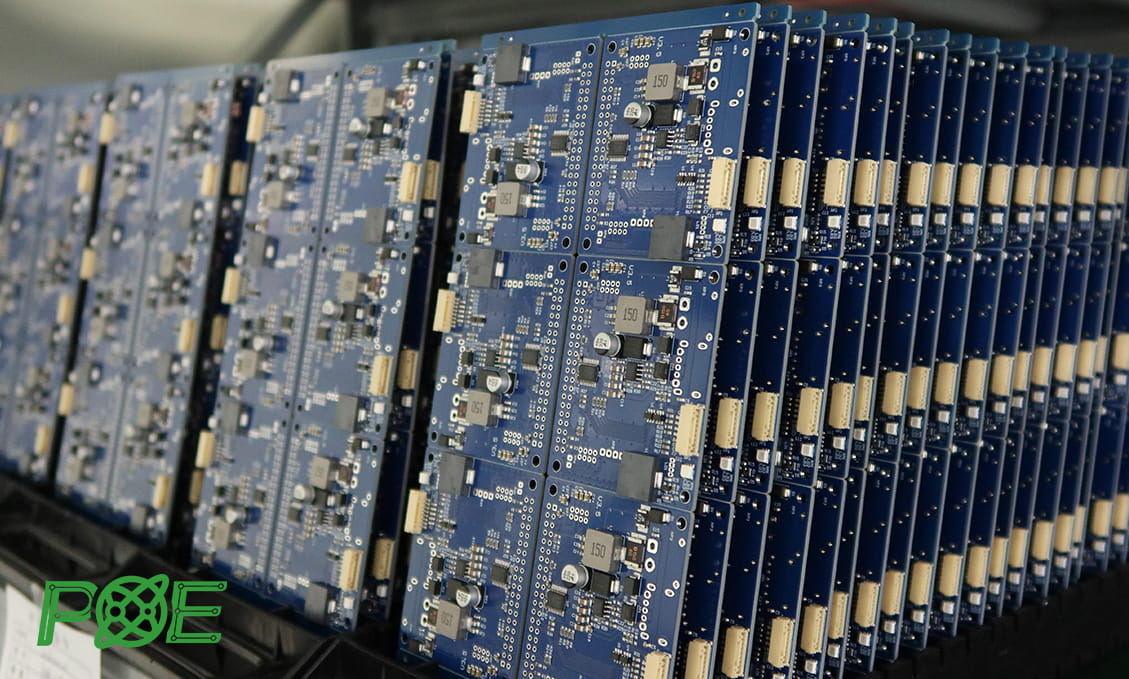
Medical Device PCB Assembly Manufacturer


If you're developing a medical device, you already know this: a PCB is never "just a board." In an infusion pump, a patient monitor, or a surgical robot, that board is part of a system where failure isn't an option. It's not about cost per unit—it's about patient safety, regulatory compliance, and long-term reliability.
That's why medical device PCB assembly is a different discipline altogether. And it's why choosing the right manufacturing partner can determine whether your product sails through FDA or CE audits—or gets held up by preventable quality issues.

Our Medical Device PCB Assembly Process


Design for Manufacturability (DFM) – Medical Grade


Before the first component is placed, our engineering team reviews your design through a medical-specific DFM checklist:

Medical Device PCB Assembly

Component selection:​ Medically rated parts only, with long-term availability and obsolescence risk assessment.
Solder joint reliability:​ Pad geometries optimized for thermal cycling and mechanical stress.
Cleanliness:​ Layout reviewed for cleanability—especially important for implantables and sterile devices.
Testability:​ Test points and boundaries defined early to support ICT and functional test coverage.

We'd rather challenge a design once than let a hidden issue surface during a regulatory audit.

Component Sourcing – Verified and Traceable


Authorized distribution only:​ We source exclusively through franchised distributors—no gray market, no counterfeits.
Lot-level traceability:​ Every component is logged from intake to final assembly, including lot codes and date codes.
Controlled storage:​ Humidity- and temperature-controlled environments, compliant with manufacturer specs.
Obsolescence management:​ We proactively flag end-of-life (EOL) risks and propose qualified alternatives—typically with a 15-day notification window.

SMT and Through-Hole Assembly – Precision That Scales


Our SMT lines are built around DECAN S1/S2 platforms (4 lines), capable of handling everything from standard SMD to 0201 and fine-pitch BGAs. We also support mixed-technology boards that combine SMT and through-hole components for mechanical robustness and power handling.

Each line is ESD-protected and operates under strict process controls aligned with IPC J-STD-001​ and IPC-A-610 Class 3.

Inspection and Testing – 100% Coverage


In medical assembly, sampling isn't good enough. Every board we ship goes through:

Automated Optical Inspection (AOI):​ Koh Young Zenith and Mirtec MV-7Xi systems for high-resolution, 2D defect detection.
X-Ray Inspection:​ Nordson Dage XD7600NT for BGA, QFN, and bottom-terminated components.
In-Circuit Testing (ICT):​ Bed-of-nails and flying-probe capabilities to validate individual circuits.
Functional Testing:​ Custom fixtures built in-house to simulate real-world operating conditions.
Microsection and FA support:​ Cross-section analysis and 8D reporting when deeper failure analysis is required.

If a defect exists, we'll find it before the board leaves our facility.

Cleaning and Conformal Coating


Medical devices often face sterilization, moisture, and chemical exposure. Our process includes:

Precision cleaning:​ Removal of ionic residues and particulates, critical for implantables and high-impedance circuits.
Conformal coating:​ Selective coating processes compatible with IPC-CC-830B requirements, protecting against moisture, corrosion, and thermal stress.

All of this happens inside our Class 3000 cleanroom, ensuring particulate control from start to finish.

Standard Purpose Relevance
ISO 13485:2016​ Quality management for medical devices Core requirement for medical assembly partners
ISO 9001:2015​ General quality management Foundation for consistent processes
ISO 14001:2015​ Environmental management Demonstrates responsible manufacturing
IPC-A-610 Class 3​ Acceptability of electronic assemblies Required for high-reliability medical devices
IPC J-STD-001​ Soldering electrical and electronic assemblies Ensures process consistency
UL Certification​ Safety and flammability compliance Required for many medical equipment markets
RoHS / REACH​ Hazardous substance and chemical compliance Mandatory for EU market access

We routinely support customers through Design History File (DHF) compilation, FDA 510(k) technical documentation, and MDR technical file preparation. Our processes have been audited by multiple Fortune 500 medical device OEMs and tier-1 contract manufacturers—so when regulators ask questions, we already have the answers.

Medical Applications POE Support


Medical Applications

Infusion Pumps & Drug Delivery:​ Precision flow control and dosing accuracy, where PCB reliability directly impacts patient safety.
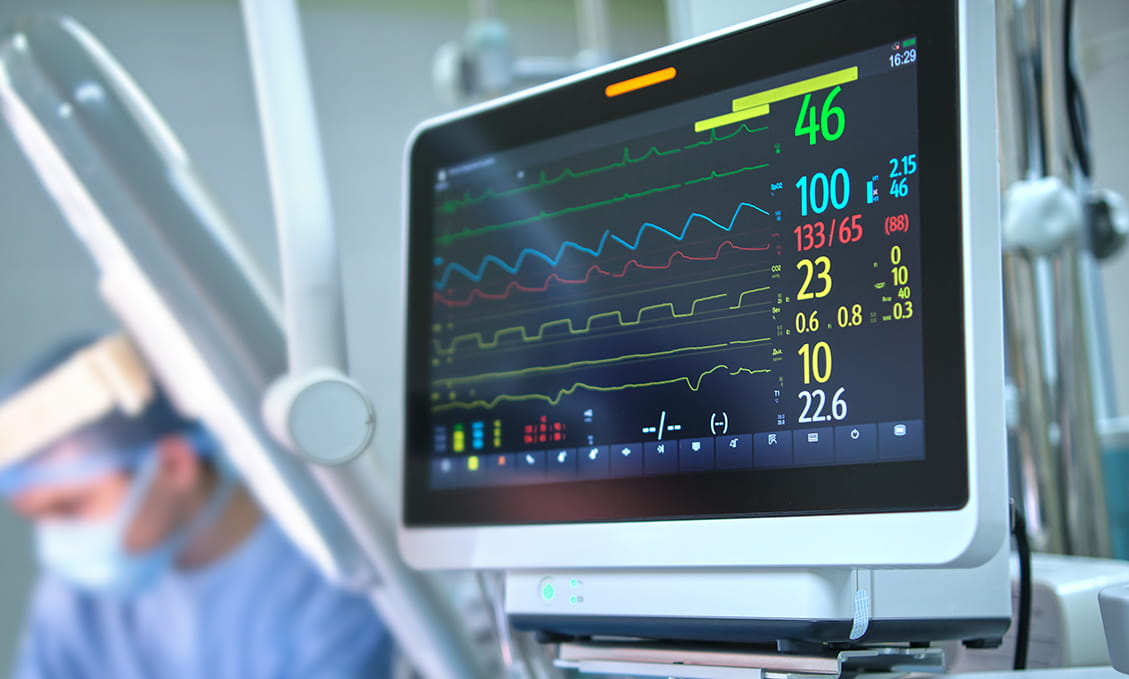
Patient Monitoring:​ ECG, SpO₂, blood pressure, and multi-parameter monitors requiring stable, noise-resistant designs.
Diagnostic Imaging:​ CT, MRI, and ultrasound systems with high-density interconnects and signal integrity demands.
Surgical Robotics:​ High-precision motion control and feedback systems operating in sterile environments.
Implantable & Wearable Devices:​ Miniaturized, biocompatible assemblies for pacemakers, neurostimulators, and continuous glucose monitors.
In-Vitro Diagnostics (IVD):​ Laboratory automation and point-of-care analyzers requiring long-term measurement stability.

Whether you're in NPI or scaling to volume, we've likely built something similar—and solved the problems you're about to encounter.

Medical vs. Standard PCB Assembly


Aspect Standard PCB Assembly Medical Device PCB Assembly
Quality Standard IPC Class 1/2 IPC Class 2/3
Inspection Sampling-based 100% inspection (AOI, X-Ray, ICT)
Traceability Batch-level Component-level, full lot traceability
Component Sourcing Open market allowed Authorized distributors only
Cleanliness Basic cleaning Medical-grade cleaning, ion residue control
Conformal Coating Optional Often required
Documentation Minimal Complete package: CoC, CoA, test data
Regulatory Oversight None Integral to FDA/CE submissions
Lead Time Faster Longer, due to added quality steps
Cost Lower Premium, reflecting risk mitigation

Medical PCB assembly isn't about being "better"in a vague sense—it's about being documentably reliable.

What to Look for in a Medical PCB Assembly Partner


Relevant certifications:​ ISO 13485 is non-negotiable. UL, IPC Class 3, and environmental certifications matter too.
Audit history:​ Have they survived rigorous customer audits? Can they provide audit summaries?
Traceability depth:​ Can they trace a single component on a single board back to its lot and date code?
Testing rigor:​ Do they do 100% inspection—not just spot checks?
Cleanroom capability:​ Is there a controlled environment for sensitive assemblies?
Change management:​ How do they handle PCNs and EOL notices? Do they involve you before making changes?
Documentation discipline:​ Will you get a complete package—test results, traceability records, compliance certificates—without chasing them?

FAQ


Q: What certifications should a medical PCB assembly partner have?​

At minimum: ISO 13485, ISO 9001, IPC-A-610 Class 3, and applicable environmental and safety certifications such as UL, RoHS, and REACH.

Q: How do you ensure component traceability?​

Every component is tracked via our MES from receiving through assembly, with lot and date codes tied to individual serial numbers.

Q: Do you support NPI and low-volume production?
Yes. We have no MOQ and dedicated NPI engineers to guide you from prototype through scale-up.

Q: Can we supply our own components?​

Absolutely. We'll inspect, log, and trace customer-supplied parts just like our own—ensuring full audit compliance.

Q: What's your typical lead time?​

NPI builds typically run 10–15 days; volume production depends on component availability and test complexity. Medical builds inherently require more time—by design.

Share This Story, Choose Your Platform!
Application of related products
Whatsapp: 85292069596
Files (zip or rar files accepted. Max 20MB.)
Link Us on